What Is It?
Knowledge means understanding patterns. Successful project management relies on knowledge of the project team. There is certain knowledge everyone brings with, and there is knowledge collected during the project course. This process secures the efficient management and exchange of both.
Who Does It?
The Role of Knowledge Manager demands communicative handling and easy to use yet efficient knowledge management (KM) tools mastering. In most cases a person in charge of Project Management Office (PMO) is the best choice.
Why Is It Important?
There is no project where everything to be done is available and known to persons in charge. The willingness to share the intrinsic tacit as well as the newly acquired knowledge, paired with a will to assimilate by others is the decisive success factor.
What Are the Steps?
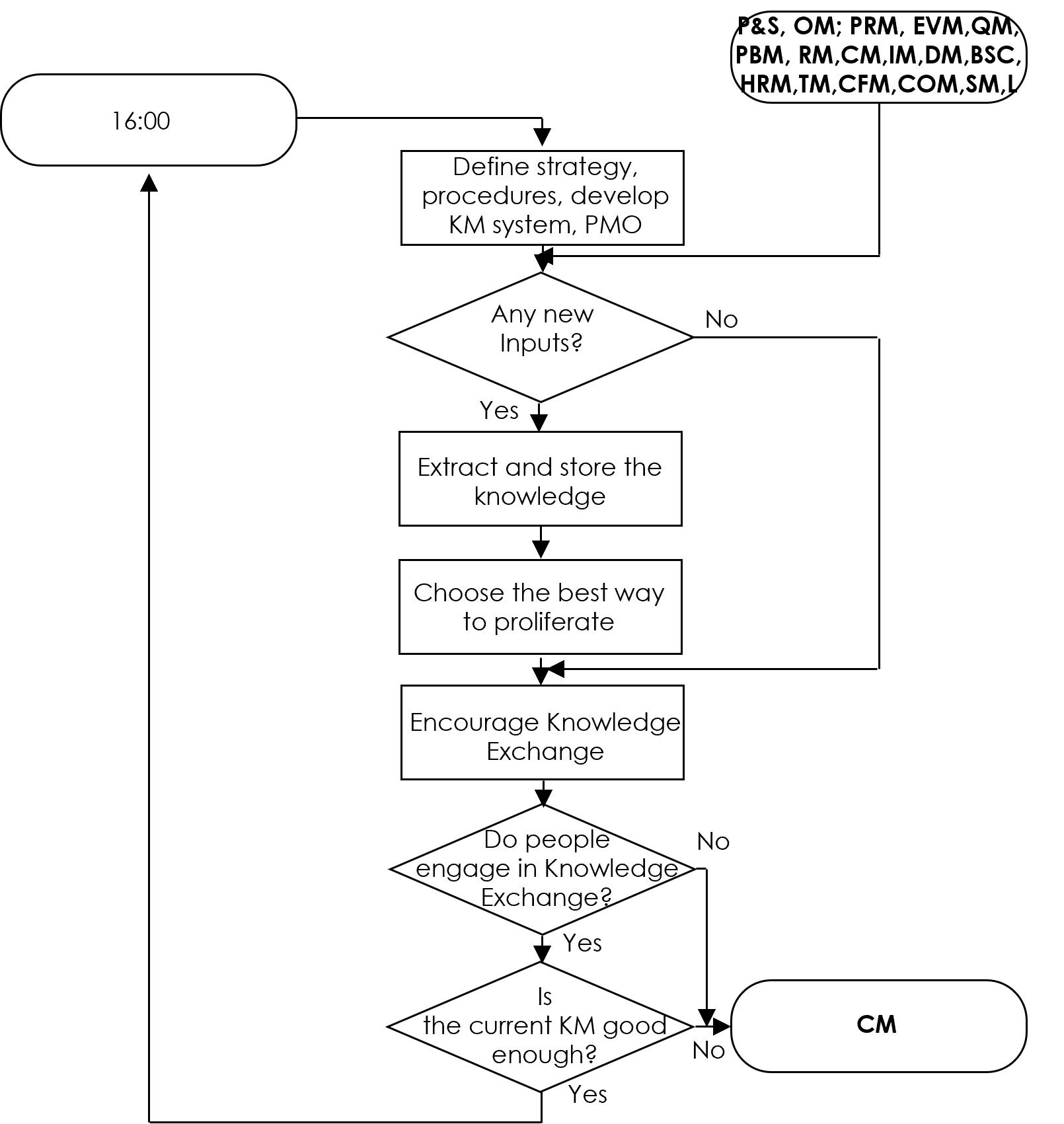
Define the KM strategy, processes, technology, people and organizational culture. Build an efficient easy to use knowledge management system and draft project management handbook. Motivate teams to engage willingly in knowledge exchange. Moderate and stipulate consciously the knowledge flow. Secure appropriate storage and retrieval. Encourage teams to aggravate the knowledge towards wisdom: understanding rules behind patterns.
What Is the Product?
Technology is a means, not the solution. First the knowledge of the team must be evaluated and then the reasonable goal-oriented KM strategy shall be chosen. Next choose the most welcome PMO officer and set the truly working knowledge exchange procedures.
How Do I Ensure That I Have Done It Right?
Do not rely on technology and procedures. Knowledge is in the heads and the willingness to share is the gate keeper. Do your utmost to motivate all in team to freely exchange their knowledge. Support them with means they wish to use, do not impose your preferences and overburden with reports. Learn from drawbacks.