What Is It?
In each project unexpected occurrences demand handling. By preparing possible reaction to those occurrences and later acting correspondingly in systematic way we can significantly reduce negative impact on our project. We call it risk management.
Who Does It?
Each team member should be made sensitive to possible risks. Someone in team shall take charge to lead the preparation and – during the project course – handling of the potential and already occurred risks.
Why Is It Important?
Risks have always negative impact on projects. Their unpredictable occurrence can magnify this negative influence. By analyzing potential risks and preparing the suitable measures we can reduce this impact to the level acceptable to the project customer/sponsor.
What Are the Steps?
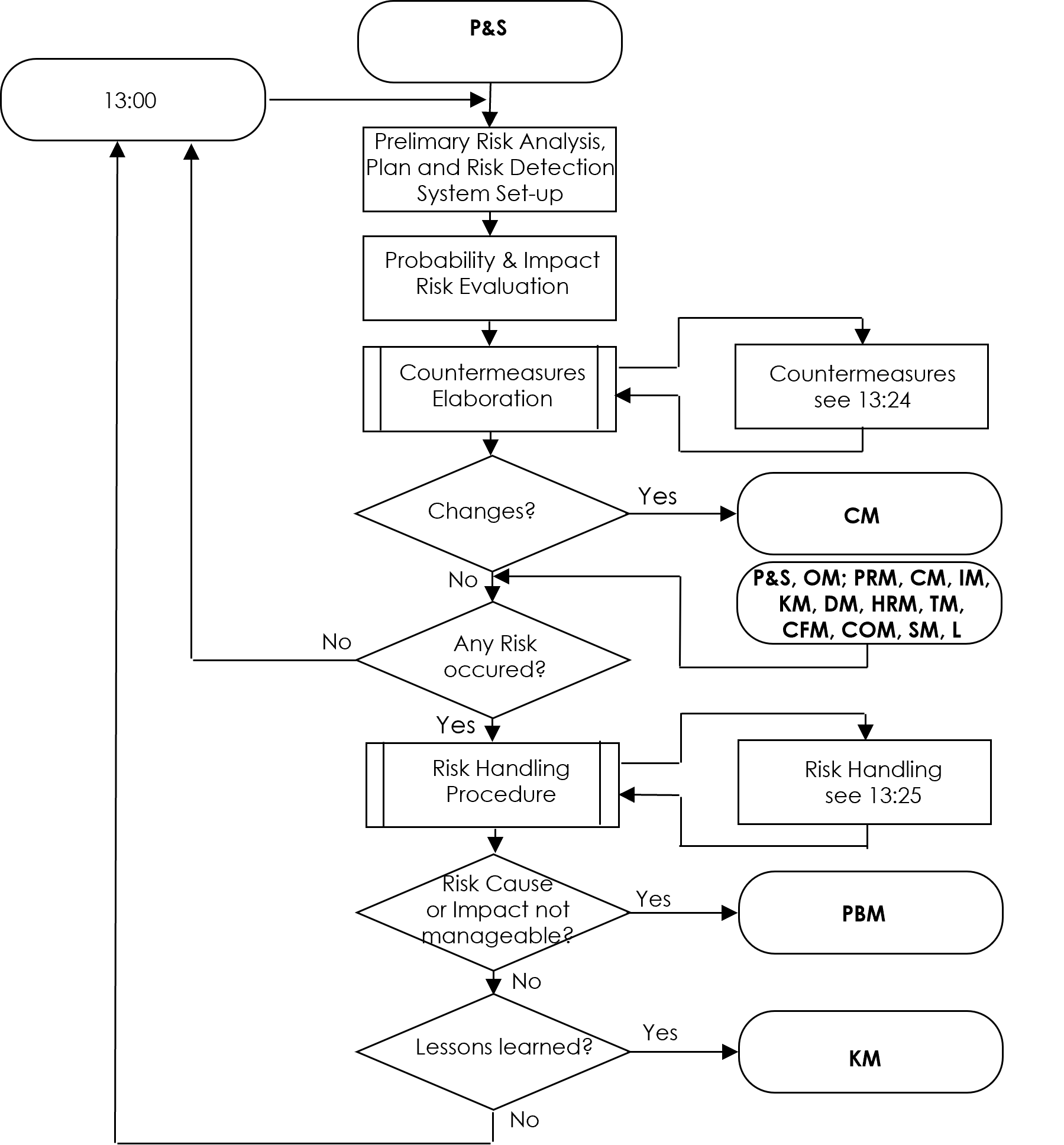
At the very first planning, initial risk assessment and detection system shall be done. An evaluation shall lead to the preparation of countermeasures. Upon risk occurrence the prepared action shall be initiated and lessons learned shall be forwarded to Knowledge Management.
What Is the Work?
First the analysis of possible occurrences with negative impact on the project shall be done. Probability of occurrence and impact levels shall lead to some classification. Measures shall be elaborated with regard to the risk as well as its impact and procedures of their application shall be defined. Upon occurrence proper handling is to be adopted, including unforeseen events.
How Do I Ensure That I Have Done It Right?
It is advisable to entrust creative analysts in a team with responsibility for this process. Whole team and, wherever applicable, external people with suitable expertise shall be involved in risk analysis and evaluation. Elaborated measures shall have sound economic justification. Make sure that customer/sponsor of the project fully supports your risk assessment and expenditures for mitigating measures.